Facebook Community
 Change Log
 Help Center


 Shopify
Funnel Testing: The Complete Guide to Optimizing Your Entire Conversion Funnel in 2026
Shopify
Funnel Testing: The Complete Guide to Optimizing Your Entire Conversion Funnel in 2026
Funnel Testing: The Complete Guide to Optimizing Your Entire Conversion Funnel in 2026

You could double your ad budget tomorrow and still make less money.
That sounds extreme, but it happens every day. Brands drive more traffic, improve click-through rates, and even lift landing page conversions, yet total revenue barely increases. Why? Because the real bottleneck is hiding somewhere else in the funnel. A checkout friction issue cancels out ad improvements. Weak post-purchase strategy erases acquisition gains. A misaligned offer wastes high-intent traffic.
In 2026, when customer journeys span multiple touchpoints and acquisition costs continue to rise, the brands that win are not the ones with the best single page. They are the ones with the most optimized funnel.
What Is Funnel Testing?
Funnel testing is the systematic process of testing multiple stages of your conversion funnel rather than optimizing a single page in isolation. Instead of asking, “How do we increase landing page conversion rate?” funnel testing asks, “Where in the entire journey are we losing revenue, and how can we fix it?”
A conversion funnel typically includes:
-
Traffic acquisition
-
Landing page engagement
-
Product page interaction
-
Checkout completion
-
Post-purchase retention
Each stage influences the next. Improving one step without evaluating the others often produces limited impact. Funnel testing connects these stages and measures performance at a system level.
Unlike traditional A/B testing, which focuses on a single page variation, funnel testing:
-
Identifies the largest drop-off points
-
Tests stage-specific hypotheses
-
Evaluates revenue impact across the full journey
-
Prioritizes changes based on bottlenecks, not assumptions
For example, increasing ad CTR by 20 percent means little if checkout abandonment remains high. Funnel testing ensures that improvements compound instead of cancel each other out.

What Are the Benefits of Funnel Testing?
In ecommerce and retail, competition is relentless. Traffic costs rise. Attention spans shrink. Margins tighten. According to industry research from the Baymard Institute, the average ecommerce cart abandonment rate is nearly 70 percent, which means most potential revenue leaks out before checkout completion. At the same time, studies from McKinsey show that companies using structured experimentation frameworks can see 5 to 10 percent revenue lift from systematic optimization.
Funnel testing is one of the few strategies that consistently helps brands close that gap.
Let’s examine why.
Better Conversion Rates
One of the most immediate benefits of funnel testing is improved conversion performance across multiple stages, not just a single page.
Consumers are emotional, impatient, and easily distracted. They expect clarity. They expect speed. They expect relevance. If your funnel creates friction at any step, they leave.
Funnel testing helps you:
-
Identify bottlenecks across landing pages, product pages, and checkout
-
Test different layouts, offers, messaging angles, and pricing structures
-
Validate what resonates with different audience segments
Instead of guessing what customers want, you experiment and measure. Through A/B tests and controlled variations, you determine which combinations deliver higher conversion rates and stronger revenue per visitor.
Small lifts at multiple stages compound. A 5 percent improvement at the landing page combined with a 5 percent improvement at checkout creates a meaningful overall gain.
Improved User Experience
Customers expect seamless digital experiences. Especially in ecommerce, where alternatives are one click away.
Funnel testing gives you visibility into how users move through your website:
-
Where they hesitate
-
Where they scroll
-
Where they abandon
By analyzing behavior across the funnel, you can:
-
Reduce friction
-
Clarify messaging
-
Improve page hierarchy
-
Simplify checkout
When the funnel feels intuitive, conversions increase naturally. Better user experience also leads to higher repeat purchase rates and stronger brand trust, which are essential for long-term growth.
More Effective Marketing Spend Allocation
Marketing should not mean spending more. It should mean spending smarter.
Funnel testing reveals:
-
Which traffic sources drive high-quality visitors
-
Which campaigns convert profitably
-
Which creatives attract low-intent clicks
When you monitor the full funnel, not just ad metrics, you can allocate budget toward channels that generate real revenue instead of vanity metrics.
Personalized Customer Experiences
Modern consumers expect personalization. Research from McKinsey suggests that personalization can drive 10 to 15 percent revenue uplift when implemented effectively.
Funnel testing enables experimentation with:
-
Personalized product recommendations
-
Dynamic offers
-
Segmented landing pages
-
Tailored post-purchase flows
Not all customers behave the same. New visitors may need education. Returning buyers may respond better to urgency or exclusivity. Testing allows you to understand these differences and build segmented experiences that increase engagement and loyalty.
Data-Driven Decision-Making
Funnel testing replaces opinion with evidence.
Instead of debating which headline is stronger or which checkout layout “looks better,” you collect measurable data:
-
Conversion rate by stage
-
Drop-off percentages
-
Revenue per visitor
This shifts decision-making from intuition to objective performance. Over time, your organization builds a knowledge base of what works and what does not.
Data-driven decisions tend to produce more consistent results and higher profitability.
Continuous Improvement and Adaptability
The digital landscape evolves constantly. Consumer behavior shifts. Platforms change algorithms. Competitors adjust offers.
Funnel testing creates a framework for continuous optimization. By regularly testing different stages of your funnel, you remain adaptable and responsive to change.
Instead of reacting to declining performance, you proactively refine your system.
Funnel testing is not a one-time tactic. It is an ongoing growth discipline.
Picture this:
-
Higher conversion rates.
-
Smoother customer journeys.
-
More efficient marketing spend.
-
Decisions backed by measurable data.
That is the real advantage. Not isolated improvements, but a structured approach that compounds gains over time and strengthens your competitive position.
Types of Funnel Testing

There are 4 types of Funnel testing
Not all funnel tests look the same.
Some focus on small improvements within a single step. Others reshape the entire journey. The structure of your test should match the type of bottleneck you are trying to fix.
Let’s break down the main types of funnel testing you can run.
Step-Level Testing
This is the most common starting point.
You isolate one stage of the funnel and test variations within that specific step.
Examples:
-
Testing two landing page headlines
-
Comparing two product page layouts
-
Testing guest checkout vs account-required checkout
Step-level testing works best when analytics clearly show a sharp drop-off at a specific stage.
For example:
-
High CTR but low landing page conversion
-
Strong add-to-cart rate but weak checkout completion
The goal here is simple: remove friction within that step before moving further down the funnel.
Learn more: Landing Page Split Testing For eCommerce — Complete Guide [2026]
Cross-Step Testing
Sometimes the issue is not within one step, but between steps.
Cross-step testing evaluates alignment across stages.
Examples:
-
Matching ad messaging with landing page headlines
-
Aligning urgency in email with checkout timers
-
Ensuring discount framing remains consistent from ad to product page
A misalignment between stages often causes hidden leakage. If your ad promises “Free Shipping Today” but your product page emphasizes “20% Off,” cognitive friction appears.
Sequential Funnel Testing
Sequential testing means optimizing one stage at a time in a structured order.
Instead of changing everything at once, you:
-
Identify the largest bottleneck
-
Optimize that stage
-
Measure funnel-wide impact
-
Move to the next constraint
This approach prevents noise. It also avoids the risk of overlapping changes that make results impossible to interpret.
Sequential testing is particularly powerful for ecommerce brands scaling paid traffic. Fixing landing page conversion before optimizing checkout, for example, creates stronger compounding results.
Full-Funnel Testing
Full-funnel testing is more strategic and often used during major redesigns or growth phases.
Rather than tweaking small elements, you test entirely different funnel structures.
Examples:
-
Short funnel vs long funnel
-
Direct-to-product page vs pre-sell landing page
-
Standard checkout vs one-page checkout
-
Post-purchase upsell flow vs no upsell flow

A/B Testing Post-purchase upsell
This type of testing evaluates structural strategy rather than tactical elements.
It requires:
-
Sufficient traffic volume
-
Strong tracking infrastructure
-
Clear revenue measurement
Full-funnel testing can produce larger lifts, but it also carries higher complexity. It is typically implemented by more mature brands with established analytics systems.
Learn more: How to A/B Test Post-Purchase Pages/Upsells on Shopify
Segment-Based Funnel Testing
Not all traffic behaves the same.
Segment-based testing evaluates funnel variations for different audience groups:
-
New vs returning visitors
-
Paid traffic vs organic traffic
-
High AOV customers vs low AOV customers
For example:
-
Returning customers may not need long educational landing pages.
-
New visitors may require stronger trust signals before checkout.
Testing by segment ensures that your funnel adapts to user intent instead of forcing a single structure on all visitors.
Each type of funnel testing serves a different purpose. The key is choosing the approach that aligns with your current bottleneck.
Understanding the Modern Conversion Funnel
A modern conversion funnel is no longer linear.
Customers rarely move from ad to product page to checkout in a straight line. They discover your brand on social media, search your name on Google, read reviews, return through email, and only then decide to purchase. Funnel testing requires understanding each stage clearly before attempting optimization.
Below is how most ecommerce funnels operate today.

Top of Funnel (Awareness Stage)
This stage is about visibility and first impressions. The goal is not immediate purchase, but qualified attention.
Common traffic sources include:
-
Ads: Paid channels such as Meta, Google, TikTok, and YouTube introduce your offer to new audiences. At this stage, metrics like CTR and cost per click indicate message-market alignment.
-
Social content: Organic posts, short-form videos, and community engagement build familiarity and trust before users click.
-
Organic search: SEO traffic often brings higher intent users who are actively researching solutions.
-
Influencer traffic: Creator endorsements accelerate trust and shorten the path to purchase.
At the awareness stage, testing focuses on creative hooks, messaging angles, and audience targeting. Poor alignment here leads to low-quality traffic entering the funnel.
Middle of Funnel (Consideration Stage)
This is where attention turns into evaluation.
Visitors are asking:
-
Is this product relevant to me?
-
Does it solve my problem?
-
Can I trust this brand?
Key assets at this stage include:
-
Landing pages: Message consistency between traffic source and landing page is critical. Headline alignment and value clarity directly impact conversion rate.
-
Product education: Explainer content, comparison charts, FAQs, and demonstration videos reduce hesitation.
-
Lead capture forms: Email or SMS opt-ins allow brands to continue the conversation if users are not ready to buy.
-
Email capture: Lead magnets, discount offers, and gated content help transition users into owned channels.
Testing in this stage often reveals messaging gaps or trust deficiencies that prevent users from moving forward.
Bottom of Funnel (Conversion Stage)
At this point, purchase intent is high. Small friction points can have large financial impact.
Key components include:
-
Product page: Clarity of benefits, placement of reviews, pricing presentation, and urgency indicators influence add-to-cart rate.
-
Add-to-cart experience: Cart design, upsell prompts, and shipping preview impact progression to checkout.
-
Checkout flow: Checkout friction is one of the biggest revenue leaks. Required account creation, hidden fees, limited payment options, or unclear shipping timelines can dramatically increase abandonment.
Testing at this stage focuses on reducing friction and increasing completion rate.
Learn more: How to Build An eCommerce Sales Funnel Strategy in 2026 [+ Examples]
Post-Purchase and Retention Stage
The funnel does not end at purchase.
Post-purchase optimization affects:
-
Repeat purchase rate
-
Customer lifetime value
Key elements include:
-
Post-purchase upsells
-
Thank-you page cross-sells
-
Follow-up email sequences
-
Loyalty or referral programs
Many brands ignore this stage, yet retention often produces higher ROI than acquisition. Funnel testing at this level can significantly increase long-term profitability without increasing ad spend.
What Can You Test in a Funnel?
Funnel testing becomes powerful when you understand that every stage contains controllable variables. The goal is not to test everything at once. It is to identify which element at which stage is limiting revenue and run focused experiments.
Below are the key variables you can test across the funnel.
Traffic Stage Variables
At the traffic stage, you are influencing who enters your funnel and with what expectations.
You can test:
Creative hooks
-
Bold problem statements vs subtle benefit-led openings
-
Short-form video vs static creative
-
Emotional framing vs logical framing
Offer positioning
-
“Free shipping today” vs “20% off today”
-
Premium positioning vs discount positioning
-
Scarcity framing vs exclusivity framing
Audience segmentation
-
Broad targeting vs interest-based targeting
-
Lookalike audiences vs retargeting
-
New vs returning customer campaigns
Landing Page Stage Variables
Landing pages act as the bridge between attention and action.
Key elements to test:
Headline alignment: Does the landing page repeat and reinforce the ad promise?
Hero layout
-
Text-first vs image-first
-
Static hero vs video hero
-
Minimal vs information-rich above-the-fold
Above-the-fold structure
-
Short punchy headline vs benefit-driven explanation
-
Single CTA vs multiple CTAs
Social proof placement
-
Reviews above the fold vs below product details
-
Star rating near CTA vs near product description
CTA button wording
-
“Buy Now” vs “Get Yours Today”
-
Direct purchase language vs softer action prompts
Landing page testing is often where early funnel gains are captured because this stage heavily influences conversion rate.

Product Page Variables
Product pages carry high purchase intent. Small changes here can significantly impact add-to-cart rate and overall revenue.
Testable elements include:
Video vs static images: Demonstration videos often increase clarity, especially for problem-solving products.
Feature-focused vs benefit-focused copy: Features explain what the product is. Benefits explain what the product does for the customer.
Reviews placement
-
Reviews immediately visible vs scroll-required
-
Highlighted testimonials vs standard review section
Urgency indicators
-
Low stock notifications
-
Limited-time badges
Price anchoring
-
Showing original price next to discounted price
-
Bundle pricing vs single-item pricing
These tests focus on increasing confidence and reducing hesitation.
Checkout Stage Variables
Checkout friction is one of the most expensive funnel leaks.
Common variables to test:
-
Guest checkout vs account required: Mandatory account creation can reduce completion rates.
-
Payment options: Adding digital wallets or alternative payment methods can increase completion.
-
Shipping transparency: Clear delivery timelines reduce anxiety.
-
Trust badges: Security icons, guarantees, and return policy visibility can increase buyer confidence.
Checkout optimization often delivers strong ROI because small percentage improvements translate directly into revenue.
Post-Purchase Stage Variables
The funnel does not stop at purchase. Post-purchase optimization influences average order value and lifetime value.
You can test:
Post-purchase upsell
-
Immediate upsell after checkout vs delayed offer
-
One-click upsell vs traditional product page redirect

Pro tip: Using flexible page builders such as GemPages allows brands to create customized post-purchase upsell pages without relying on rigid templates. This makes it easier to test layout variations, messaging angles, and offer structures in a controlled way.
Thank-you page cross-sell
-
Single recommended product vs curated collection
-
Discounted add-on vs complementary item
Follow-up email sequence timing
-
Immediate confirmation-only email vs early cross-sell
-
Short sequence vs extended nurture sequence
Retention-stage testing often generates higher ROI than acquisition-stage optimization because it increases value from existing customers.
When you look at the funnel this way, it becomes clear that growth is rarely blocked by a single element. Revenue constraints typically exist across multiple stages. Funnel testing helps you identify which variable at which stage deserves attention next, so improvements compound instead of cancel each other out.
Step-by-Step Funnel Testing Framework

Funnel testing only works when it follows a structured process. Random experiments create noise. A clear framework creates clarity, learning, and compounding growth.
Below is a practical approach you can apply immediately.
Step 1: Map Your Entire Funnel
Before running any experiment, you need visibility.
Map the journey:
-
From click to repeat purchase
-
From ad → landing page → product page → checkout → post-purchase
Identify measurable checkpoints:
-
CTR
-
Add-to-cart rate
-
Checkout completion rate
-
Repeat purchase rate
Track drop-off rates between each stage. Even a simple visualization can reveal where users are abandoning the journey.
For ecommerce brands using Shopify, tools like GA4, heatmaps, and session recordings provide behavioral insight. If you build campaign-specific landing pages, using a flexible builder such as GemPages can make it easier to adjust layout elements quickly once bottlenecks are identified.
Mapping first prevents optimization guesswork.
Step 2: Identify the Largest Bottleneck
Not all funnel issues deserve equal attention.
Prioritize based on:
-
Drop-off percentage: Where are the biggest losses?
-
Revenue impact: Which stage affects the most money?
-
Traffic volume: Where does the most traffic pass through?
For example:
-
A 3 percent checkout drop-off on high traffic may matter more than a 10 percent drop-off on low-volume pages.
-
A small lift at the product page might generate more total revenue than optimizing a low-traffic blog page.
Focus where the constraint is strongest.
Step 3: Build a Hypothesis
Every funnel test should start with a clear, measurable assumption.
Example: “Moving customer reviews above the fold will increase product page conversion rate by 7%.”
A strong hypothesis includes:
-
The element being changed
-
The expected outcome
-
A measurable metric
Avoid vague goals like “improve UX.” Precision creates meaningful insights.
Step 4: Run Controlled Experiments
Discipline matters here.
-
Change one stage at a time
-
Maintain consistent traffic sources during the test
-
Avoid overlapping experiments that affect the same users
If you are testing a landing page variation, ensure that traffic quality remains stable. Otherwise, you may misattribute performance changes to design rather than audience shifts.
For Shopify merchants, experimentation tools such as GemX for A/B testing can help isolate variations and measure results accurately, especially when testing layout or content changes on key pages.
Track macro metrics, not just micro lifts.
Step 5: Measure Funnel-Level Impact
A test is not successful just because one stage improved.
Evaluate:
-
Revenue per visitor
-
Conversion rate lift
-
AOV changes
-
CAC impact
For example:
-
Did increasing landing page conversion reduce AOV?
-
Did checkout simplification increase total revenue but lower upsell attachment rate?
Funnel testing requires system thinking. Improvements must strengthen overall profitability, not just isolated metrics.
Revenue per visitor often becomes the most reliable north-star metric because it captures both conversion rate and order value.
Step 6: Document and Iterate
Testing without documentation leads to repeated mistakes.
Maintain a test log:
-
Hypothesis
-
Variation details
-
Duration
-
Results
-
Insights
Build institutional knowledge over time. Patterns will emerge. You will begin to understand how your audience responds to urgency, trust signals, layout changes, and pricing structure.
Scale successful changes across segments:
-
Apply winning landing page layouts to other campaigns
-
Replicate checkout improvements across product categories
-
Extend high-performing upsell strategies to retention flows
Funnel testing is not a one-time project. It is a continuous optimization system. When executed with discipline and measured holistically, it becomes a long-term growth engine rather than a collection of disconnected experiments.
Tools for Funnel Testing
Funnel testing without proper tools is guesswork. The right stack gives you visibility, control, and experimentation capability across every stage of the customer journey.
You do not need dozens of platforms. You need clarity in tracking, precision in testing, and flexibility in execution.
Analytics and Tracking
Before running experiments, you must understand behavior.
GA4
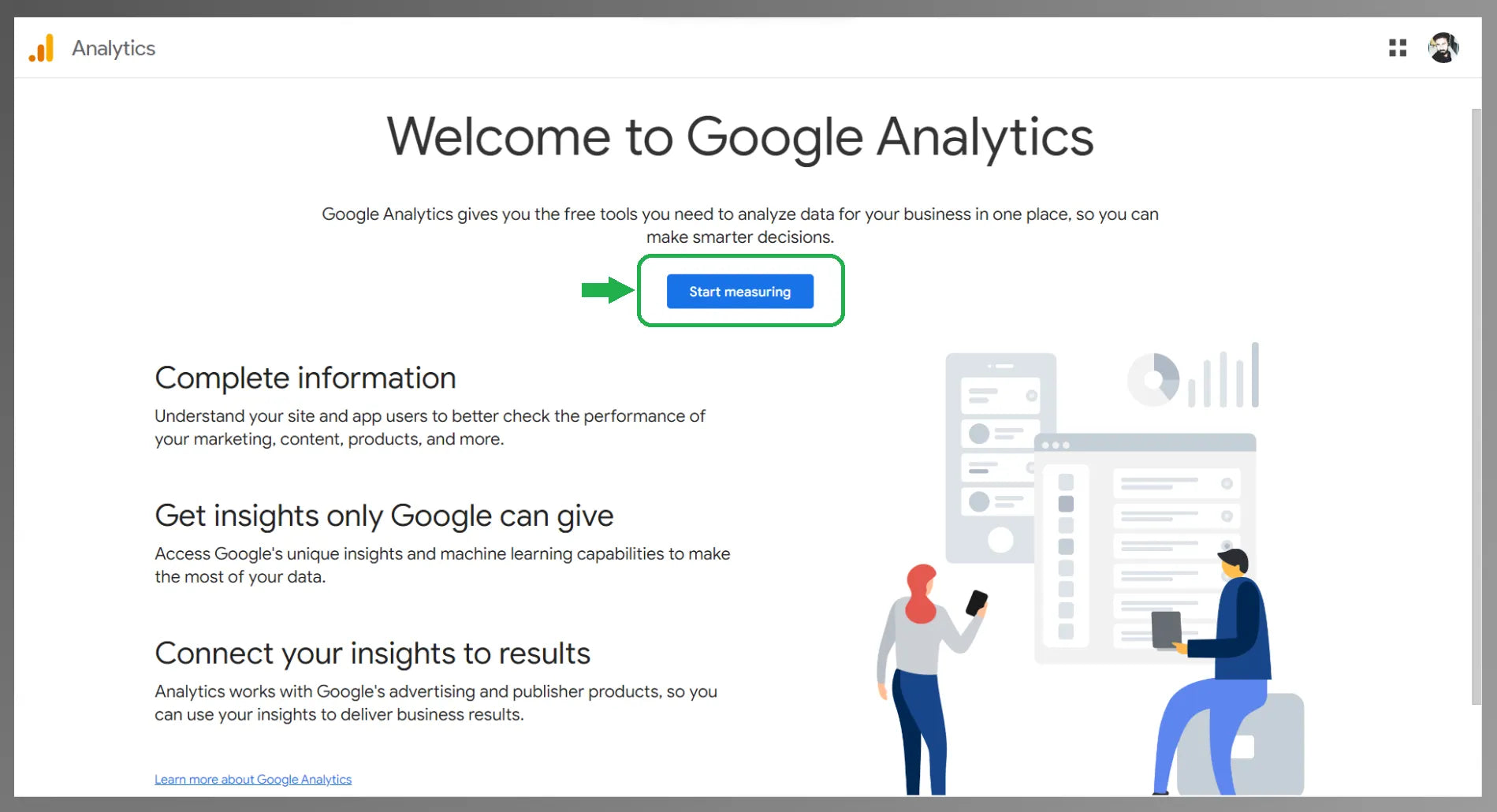
Google Analytics 4 helps you:
-
Track user journeys across multiple touchpoints
-
Analyze drop-off between stages
-
Measure revenue per user
-
Segment traffic sources
Funnel exploration reports inside GA4 allow you to visualize where users exit and where bottlenecks exist.
Learn more: How to Set Up Google Analytics 4 (GA4) for Your Shopify Store
Heatmaps
Heatmaps reveal:
-
Scroll depth
-
Click behavior
-
Attention distribution
They help you understand whether users are interacting with key elements like CTAs, pricing, and reviews.
If users never scroll to your social proof section, the issue is placement, not content.
Session Recordings
Session recordings provide qualitative insight into:
-
Cursor movement
-
Rage clicks
-
Confusion patterns
-
Form hesitation
While analytics show what is happening, recordings help explain why it is happening.
A/B Testing Tools
Once you identify bottlenecks, experimentation tools allow you to validate solutions.
GemX: CRO & A/b Testing enables Shopify merchants to run structured experiments across landing pages, product pages, and key conversion points.

It allows you to:
-
Split traffic between variations
-
Measure performance impact
-
Compare revenue metrics
-
Avoid technical complexity
This is especially valuable when testing stage-specific changes without developer involvement.
Experimentation Platforms
Dedicated A/B testing platforms allow:
-
Controlled traffic allocation
-
Statistical validation
-
Segment-based experiments
They are useful for brands running high-volume traffic and advanced experimentation programs.
Native Ecommerce Tools
Some e-commerce platforms include:
-
Basic split testing functionality
-
Checkout optimization tools
-
Post-purchase offer testing
While limited compared to full experimentation tools, they can be effective for simple tests.
Flexible Page Builders for Funnel Optimization
Funnel testing requires iteration speed.
If layout changes require development cycles, experimentation slows down.
Campaign-specific landing pages
Creating dedicated landing pages for paid traffic prevents misalignment between ad promise and page experience.
Fast iteration
Flexible builders allow:
-
Headline adjustments
-
Section rearrangement
-
CTA changes
-
Offer framing tests
without waiting on engineering resources.
Layout control for stage-specific tests
Being able to control:
-
Above-the-fold structure
-
Social proof placement
-
Upsell page design
makes it easier to isolate variables during funnel testing.
You can try GemPages - a landing page builder to provide the flexibility needed to test structural variations quickly while maintaining brand consistency.
Conclusion
Funnel testing transforms optimization from isolated page tweaks into a structured growth strategy. Instead of chasing small conversion lifts, you analyze the entire journey, identify bottlenecks, and test systematically across traffic, landing pages, product pages, checkout, and retention.
In 2026, when acquisition costs continue to rise and customer journeys grow more complex, testing one page at a time is no longer sufficient. Brands that map their funnel, prioritize high-impact constraints, measure revenue per visitor, and iterate consistently build compounding performance advantages.
FAQs