Facebook Community
 Change Log
 Help Center


25+ Creative Shopify Business Ideas to Maximize Profit in 2026

Starting a Shopify business in 2026 requires more than picking a product and launching a store. The ecommerce market is more competitive, customer expectations are higher, and buyers are far more selective before making a purchase. What determines success today is how well a business idea aligns with real demand, clear positioning, and the way customers actually shop online.
This article explores 25+ creative Shopify business ideas that have strong profit potential in 2026. Each idea is grounded in observable market behavior, buyer intent, and proven ecommerce patterns. Along the way, you will learn why these ideas work, where most sellers make mistakes, and how to turn a Shopify business idea into a store that generates consistent revenue instead of short term traction.

What Makes a Good Shopify Business Idea in 2026
A strong Shopify business idea in 2026 is defined less by the product itself and more by the conditions surrounding it. Many stores fail not because the product is bad, but because the idea lacks market fit, differentiation, or a viable path to conversion.
Demand must already be visible
The most reliable Shopify ideas come from markets where customers are actively searching, comparing options, and making purchases. This demand can be observed through search queries, ad activity, competitor volume, and social proof across multiple channels. Ideas based purely on speculation or personal preference often struggle to gain traction because they lack a ready audience.
A good rule is simple. If people are already spending money in the category, the opportunity exists. Your job is to position the offer better.
The idea allows clear differentiation
Selling generic products in crowded categories makes growth difficult and expensive. A strong Shopify business idea supports differentiation through audience focus, use case, pricing logic, or brand positioning. This could mean serving a narrower niche, solving a specific problem, or presenting the product in a way competitors do not.
Differentiation reduces price pressure and improves conversion because customers understand why your store exists.
The business model supports repeat revenue or scale
Ideas with repeat purchase potential tend to outperform one time sales. Subscriptions, refills, consumables, digital products, and services often provide higher lifetime value and more predictable revenue. Even physical products perform better when they fit into routines or ongoing needs.
In 2026, scalability matters as much as creativity.
The value can be communicated clearly on a product page
One practical test separates strong ideas from weak ones. Can the value be explained within a few seconds when someone lands on the product page?
If customers need to scroll, read extensively, or decode the offer, conversion rates drop. The best Shopify business ideas are easy to understand, visually demonstrable, and immediately relevant to the buyer’s problem or desire.
How to Find Profitable Niches and Products to Sell Online
Before exploring specific Shopify business ideas, it is essential to understand how profitable niches and products are identified. Market research and trend analysis form the foundation of every successful ecommerce business because they reveal where real demand exists and where opportunities are being overlooked.
In a crowded ecommerce landscape, guessing or copying competitors often leads to weak positioning. Sellers who consistently generate revenue tend to rely on data-driven signals to uncover products that customers already want and are actively searching for.
Use search behavior to identify demand
Search engines reflect real consumer intent. When people look for products, solutions, or comparisons, their searches reveal what they care about and where demand is forming.
Tools like Google Trends help identify whether interest in a product category is growing, stable, or declining over time. This makes it easier to filter out ideas that spike briefly and focus on niches with sustained interest. The goal is not to follow every rising trend, but to spot patterns that align with your target audience and business direction.
Product ideas perform better when search interest is consistent rather than explosive and short-lived.
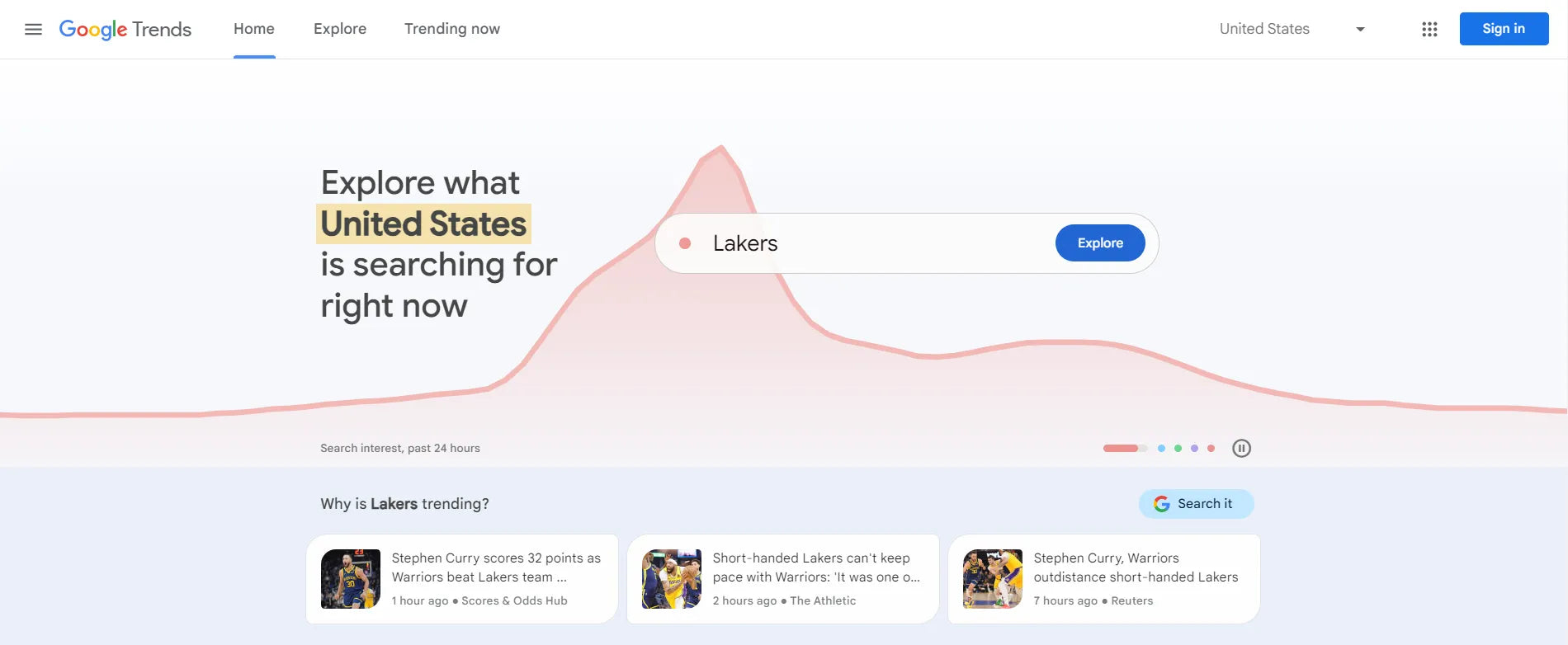
Search behavior helps reveal whether product demand is stable, seasonal, or declining.
Narrow options with product research data
As the number of ecommerce ideas grows, manual research becomes inefficient. Product research tools help reduce noise by surfacing products that already show sales activity, pricing patterns, and engagement signals across platforms.
Instead of browsing endless ideas, these tools allow sellers to focus on niches where products demonstrate clear buying behavior. This shortens the decision-making process and helps avoid investing time in ideas that lack commercial potential.
Product research data is most valuable when used to confirm demand, not to blindly replicate what others sell.
Study competitors to uncover gaps
Competitor analysis plays a key role in niche validation. Reviewing leading stores within a category helps clarify what customers are already buying and how products are positioned.
The objective is not to copy competitors, but to identify what they fail to explain, improve, or serve well. Gaps in messaging, unclear value propositions, poor user experience, or limited product education often signal opportunities to enter the market with a stronger offer.
Well-researched competition often indicates opportunity rather than saturation.
Align product ideas with long-term selling potential
Not all popular products lead to sustainable businesses. Products that support repeat purchases, seasonal replenishment, or logical upsells offer stronger long-term potential than one-time novelty items.
When evaluating a niche, consider whether the product fits into a routine, solves a recurring problem, or encourages ongoing engagement. These factors contribute to higher customer lifetime value and more stable growth.
Finding profitable niches and products is less about discovering hidden trends and more about interpreting demand signals correctly. Sellers who combine search behavior, product data, and competitor insights put themselves in a stronger position to build Shopify businesses that scale.
Best Shopify Business Ideas by Category
Shopify continues to be one of the most accessible ecommerce platforms for anyone looking to start or expand an online business in 2026. From first-time founders to experienced sellers, Shopify supports a wide range of business models thanks to its flexible checkout system, app ecosystem, and ability to scale.
Below are 25+ proven Shopify business ideas with strong profit potential in 2026. These ideas are based on observable demand, buying behavior, and practical ecommerce models that work well on Shopify.
1. Niche dropshipping products for daily routines

This idea focuses on dropshipping products that fit into a specific daily routine rather than general gadgets. Examples include posture correctors for desk workers, reusable lunch containers for office meals, or compact travel organizers for frequent flyers.
These products sell because customers already feel the problem and actively search for solutions. On Shopify, this model works best when the store centers on one routine and shows how the product fits naturally into everyday life. Clear usage visuals and problem-based messaging tend to drive higher conversions.
Supplier reliability is critical here, since repeat orders and word-of-mouth depend on consistent quality and shipping speed.
2. Print-on-demand apparel for clearly defined audiences

Instead of generic slogan shirts, this idea targets very specific groups such as nurses, software developers, gym owners, teachers, or local communities. Products usually include t-shirts, hoodies, sweatshirts, and tote bags.
What makes this model profitable is relevance. Customers buy because the product reflects their identity, not because of the fabric or cut. Shopify supports this model well through low-risk product launches, limited collections, and fast design testing.
Stores perform better when they release small themed drops rather than large catalogs.
3. Single-product beauty tools with strong demonstrations
This business idea centers on one hero product, such as facial ice rollers, LED skincare devices, scalp massagers, or at-home facial tools.
These products gain attention quickly, but sustainable sales depend on education. Successful Shopify stores explain how the tool works, who it is for, and how often it should be used. Demonstration videos and before-and-after visuals significantly improve trust.
Focusing on one product helps keep messaging simple and avoids confusing customers with too many options.
Learn more: 18 Best One Product Shopify Store Examples in 2026
4. Skincare products for specific skin concerns

Rather than selling general skincare, this idea targets narrow problems like adult acne, sensitive skin, post-gym skincare, or skincare routines for men.
Products may include cleansers, serums, moisturizers, or bundled routines. This approach works because customers with specific concerns are more motivated to buy and more likely to return if the product works.
On Shopify, clear ingredient explanations, routine guides, and honest expectations help differentiate smaller brands from mass-market competitors.
Learn more: Top 100 Inspiring Shopify Beauty Stores We Love in 2026
5. Athleisure basics designed for everyday comfort
This idea focuses on apparel that customers can wear daily, such as leggings, joggers, hoodies, and lightweight jackets designed for comfort rather than fashion trends.
Customers in this category care about fit, fabric, and versatility. Shopify stores succeed when they start with a limited number of products and invest in strong photography that shows real-life use.
Clear sizing guidance and customer reviews help reduce returns and increase buyer confidence.
6. Home organization products for small living spaces

This business sells practical storage solutions like drawer organizers, under-sink shelves, foldable storage boxes, and space-saving kitchen tools.
Urban living and smaller apartments drive consistent demand for these products. Customers often search for solutions to very specific problems, which makes problem-focused product pages effective.
Bundles based on room type, such as kitchen or bedroom, often increase average order value on Shopify.
7. Digital templates for work and personal organization
This idea involves selling digital products such as Notion templates, budgeting spreadsheets, content calendars, fitness planners, or project management systems.
Customers buy these products to save time and reduce mental load. Clear previews and screenshots are essential, since buyers want to see exactly what they will receive.
Shopify works well for this model by handling payments and instant delivery without complex setup.
8. Online courses with practical, outcome-driven topics
Instead of broad education, this idea focuses on courses that promise a clear result, such as learning a specific tool, improving a skill, or completing a defined task.
Examples include beginner design courses, email marketing fundamentals, or personal finance basics. Customers respond better when the course scope is narrow and actionable.
Many successful sellers bundle courses with downloadable resources to increase perceived value.
Learn more: 15 Best Online Course Landing Page Examples to Boost Enrollments & Design Tips for Success
9. Productized consulting services sold through Shopify
This model turns services into fixed offers, such as website audits, marketing strategy reviews, or brand consultations.
Each service has a clear scope, price, and delivery timeline, which reduces friction for buyers. Shopify checkout makes purchasing a service feel as simple as buying a product.
This approach works especially well for freelancers and consultants who want predictable revenue without long sales calls.
10. Subscription-based consumable products
This idea includes products customers use regularly, such as supplements, skincare refills, cleaning supplies, or personal care items.
Customers subscribe for convenience and consistency rather than discounts. Shopify supports this model through subscription apps and recurring billing tools.
Clear subscription management and flexible delivery options help improve retention and long-term revenue.
11. Eco friendly household essentials for daily use
This Shopify business focuses on everyday household products designed to reduce waste and replace disposable items. Common products include reusable kitchen towels, refillable cleaning sprays, silicone food storage bags, compostable trash liners, and bamboo dish brushes.
These products sell well because they fit into existing routines. Customers do not need to change habits completely, only switch the item they already use. On Shopify, this category performs best when products are presented as practical upgrades rather than lifestyle statements.
Clear explanations about durability, cost savings over time, and usage scenarios help increase trust and conversion.
Learn more: 10 Profitable Shopify Store Ideas for 2026 (Examples & Tips)
12. Personalized pet accessories and functional pet products
This idea centers on pet products that combine function with personalization. Examples include custom name collars, engraved ID tags, orthopedic pet beds, slow feeder bowls, and travel accessories for pets.
Pet owners often spend emotionally and repeatedly, especially when products improve comfort or safety. Shopify stores in this niche benefit from personalization features and strong product visuals that show pets actively using the item.
Upsells such as matching accessories or replacement parts can significantly increase order value.
13. Curated subscription boxes for focused interests
Subscription boxes work best when built around a specific interest rather than a general theme. Examples include monthly boxes for dog owners, self care routines, coffee enthusiasts, or hobby based activities.
Customers subscribe for discovery and convenience. Shopify supports this model well through recurring billing and subscription management apps. Clear communication around box contents, delivery frequency, and cancellation policies helps reduce churn.
This idea favors brands that build anticipation through previews and community engagement.
14. Smartphone accessories that solve specific problems
Instead of selling generic electronics, this idea targets practical smartphone accessories such as magnetic car mounts, charging organizers, privacy screen protectors, cable management solutions, and multi port chargers.
These products succeed when the store focuses on one use case at a time, such as driving, remote work, or travel. Customers are often problem aware and ready to buy, which shortens the decision process.
Clear compatibility details and usage demonstrations are critical for reducing returns.
15. Creator focused digital tools and resources
This business sells digital products built specifically for content creators, freelancers, or online educators. Examples include social media content planners, video editing presets, caption frameworks, and monetization templates.
These products work because they reduce effort and decision fatigue for creators who already understand the value. Shopify handles payments and instant delivery smoothly, making it suitable for this model.
Bundles and tiered pricing often help increase average order value without increasing support overhead.
16. Refill personal care products for repeat purchase
This idea focuses on personal care products designed to be refilled rather than replaced. Typical products include refill packs for hand soap, shampoo, body wash, deodorant, or toothpaste tablets.
Customers in this category usually make repeat purchases because these products are part of daily routines. The initial purchase often comes from curiosity or sustainability interest, but retention is driven by convenience and product performance.
On Shopify, this model works well with subscription options or reminder-based reorders. Clear explanations of how refills work and how often customers need them help set expectations and reduce churn.
17. Kitchen tools that solve one specific cooking problem
Instead of selling many kitchen items, this idea centers on one or two tools that solve a clear, common issue. Examples include oil spray bottles for controlled cooking, compact food choppers, portion control containers, or stackable meal prep boxes.
These products perform well because customers usually search with a specific problem in mind. Shopify product pages convert better when they show before-and-after scenarios and short demonstrations.
Bundling accessories or replacement parts can increase average order value without complicating the store.
18. Kids educational products for home learning
This business idea targets parents looking for educational tools for children at home. Products include activity kits, learning cards, printable worksheets, educational games, and early learning toys.
Parents often buy based on perceived developmental value rather than price. Shopify stores in this niche benefit from clear age guidance, learning outcomes, and usage examples.
This category works well for bundles, such as themed learning kits or age-based packages, which simplify decision-making for parents.
19. Wellness products for stress relief and sleep routines
This idea focuses on products used during rest or relaxation routines. Examples include weighted eye masks, aromatherapy tools, sleep masks, posture pillows, and calming teas or supplements.
Customers usually buy these products when they are already experiencing discomfort or stress, which shortens the decision cycle. On Shopify, conversion improves when the store explains how the product fits into a nighttime or recovery routine.
Clear instructions and realistic expectations help reduce returns and dissatisfaction.
20. Hobby focused products for at home activities
This business sells products tied to specific hobbies such as painting kits, crochet supplies, journaling tools, or beginner craft sets.
These products sell because they promise enjoyment, learning, or creative expression. Customers often buy as gifts or for personal downtime. Shopify supports this model well through curated collections and seasonal promotions.
Starter kits often outperform individual items because they remove uncertainty for beginners.
21. One-product problem-solving brands with strong visual demos
This business model focuses on selling one core product that solves a very specific, everyday problem. Examples include spill-proof travel mugs, posture correction braces, door draft blockers, or anti-slip mats for bathrooms.
Customers who buy these products are usually problem-aware and actively searching for a fix. Their decision is driven by clarity rather than brand loyalty. If they understand the problem and see the solution clearly, they buy.
Shopify is well suited for this idea because a single-product store can be built around one clear landing page. Visual demonstrations, short videos, and simple benefit-focused copy tend to convert better than long explanations. Many successful stores in this category rely on paid traffic and quick validation cycles.
22. Creator-led merchandise tied to content themes
This idea involves selling merchandise that connects directly to a creator’s content, such as YouTubers, podcasters, educators, or niche influencers. Products often include apparel, notebooks, mugs, or accessories that reference inside jokes, catchphrases, or recurring topics from the content.
The key difference from generic merchandise is context. Buyers already trust the creator and understand the meaning behind the product. Purchasing becomes a form of support or identity expression rather than a purely transactional decision.
Shopify works well here because creators can launch limited drops, control branding, and integrate checkout links directly into content platforms. Scarcity and time-limited launches often improve conversion rates.
23. Community-driven products co-created with customers
This business idea centers on involving the audience in product creation. Examples include allowing customers to vote on designs, choose colors, suggest features, or participate in pre-orders for upcoming products.
Common product categories include apparel, stationery, lifestyle goods, and hobby-related items. Customers are more willing to buy because they feel ownership over the outcome, which reduces hesitation and returns.
Shopify supports this model through pre-order apps, email marketing, and landing pages that explain the co-creation process. Brands using this approach often focus on smaller, highly engaged communities rather than mass reach.
24. Membership-based access to exclusive tools or content
Instead of selling individual products, this idea offers paid access to a library of resources, tools, or exclusive content. Examples include business resource hubs, design asset libraries, private learning portals, or premium community access.
Customers join for ongoing value rather than a single download. Retention depends on regular updates and clear communication about what members receive.
Shopify supports recurring payments and gated access through memberships and subscription tools. This model suits founders who prefer predictable monthly revenue and long-term customer relationships over constant acquisition.
25. Hybrid digital and physical product bundles
This idea combines physical products with digital support materials. Examples include fitness equipment paired with workout plans, journals paired with guided exercises, or hobby kits paired with instructional videos.
Customers perceive higher value because they receive both tools and guidance. This reduces uncertainty, especially for beginners, and increases satisfaction.
Shopify handles this model well because digital content can be delivered automatically after checkout, while physical products are shipped as usual. Bundles often justify higher price points and improve conversion rates.
26. Local-first ecommerce brands with regional positioning
This idea focuses on selling products tied to a specific city, region, or culture. Products may include apparel, food-related items, decor, or gifts that reflect local identity.
Customers buy these products as souvenirs, gifts, or expressions of pride. Local positioning helps reduce competition because the brand speaks directly to a defined audience.
Shopify enables these brands to reach both local buyers and international customers interested in regional culture. Storytelling and authenticity play a major role in conversion.
How to Build a High-Converting Store for Any Shopify Business Idea
A strong Shopify business idea only becomes profitable when it is presented clearly and friction is removed from the buying journey. Across different niches and product types, high-converting Shopify stores tend to follow the same execution principles.
Start with structure before optimization
Before thinking about testing or scaling traffic, the foundation of the store must be right. This includes page structure, content hierarchy, and visual clarity.
High-performing Shopify stores usually:
-
Lead with one clear value proposition above the fold
-
Use sections to guide buyers through problem, solution, proof, and action
-
Remove distractions that compete with the primary call to action
This is where GemPages Landing Page Builder for Shopify plays a key role.

Instead of being limited by theme layouts, merchants can build fully custom product pages and landing pages that match buyer intent for each business idea, whether it is dropshipping, digital products, or subscriptions.
Design pages around buyer intent, not features
Buyers do not scan pages looking for feature lists. They look for confirmation that the product fits their need.
Effective Shopify pages typically:
-
Show the product in real use scenarios
-
Explain outcomes before specifications
-
Group information into short, scannable sections
With GemPages, merchants can design different page layouts for different product types, such as:
-
One-product problem-solving pages
-
Long-form education pages for considered purchases
-
Short, focused pages for impulse buys
This flexibility allows each business idea to be presented in the most appropriate format rather than forcing everything into the same template.
Build trust at the moment of hesitation
Trust signals work best when they appear exactly where buyers pause.
Instead of placing reviews and guarantees randomly, high-converting stores:
-
Place reviews near pricing and add-to-cart buttons
-
Highlight shipping, returns, and guarantees close to checkout actions
-
Use visual proof such as photos and short videos alongside testimonials
GemPages makes it easier to control where these elements appear, helping stores reduce doubt at critical decision points.
Optimize for mobile-first shopping behavior
Most Shopify traffic comes from mobile devices, and conversion issues often stem from poor mobile layout rather than product quality.
Strong mobile pages:
-
Keep key messages visible without excessive scrolling
-
Use large, thumb-friendly buttons
-
Avoid heavy text blocks that slow decision-making
With GemPages, merchants can adjust spacing, layout, and section order to ensure pages remain clear and usable on mobile without sacrificing desktop design.
Improve conversion through iteration, then validate with testing
Once a strong page structure is in place, optimization becomes meaningful. At this stage, testing helps validate which layout, message, or offer performs better.
This is where GemX: CRO & A/B Testing complements GemPages. Pages built in GemPages can be tested in GemX to measure how changes in headlines, layouts, or offers impact real user behavior.

The key is sequence:
-
Use GemPages to build high-quality, intent-driven pages
-
Use GemX for Shopify to test and refine what works best
This approach prevents testing weak pages and helps teams focus on changes that actually move conversion metrics.
Conclusion
Building a profitable Shopify business in 2026 is less about finding a rare idea and more about executing the right idea properly. As the 25+ business ideas in this guide show, opportunities already exist across dropshipping, digital products, subscriptions, creator-led brands, and service-based models. What separates stores that scale from those that stall is how clearly the offer is presented and how well the store aligns with real buying behavior.
FAQs